The Electric Educator: book review
Showing posts with label book review. Show all posts

Friday, February 17, 2017

Book Review: Making your School Something Special by @rushtonh


Making your School Something SpecialRushton Hurley (@rushtonh) is a story teller. His first and latest book, Making your School Something Special, will help you tell your story, the story of your students, the story of your school, more effectively.

What is it that makes your classroom, your school, your district special?


Rushton argues that there are three key attributes to what makes every school special:
  • Meaningful experiences for both teachers and students
  • A strong, shared school culture
  • Opportunities for professional growth
In-class instruction and activities go a long way to fostering these three attributes. Learning activities, Rushton suggests, can be categorized into four big (and broad) buckets:
  • Learning that is powerfully memorable
  • Learning that is generally effective learning
  • Learn that is weak but easy
  • Learning that is a waste of time
This lesson framework is very effective both inside and outside of the classroom. School administrators, workshop leaders, instructional technologists, and conference speakers can apply this framework as well.

Are your staff meetings “powerfully memorable?”
Is your professional development “powerfully memorable?
Is parent teacher night “powerfully memorable?”

It is not expected that every single lesson in every class be categorized as “powerfully memorable.” That would be unrealistic. Some days will feature “generally effective learning” and ever every teacher has lessons that fall into the bottom two categories; if you don’t, then you probably don’t need to read this book!

Reading and understanding Rushton’s categories for learning caused me to reflect on my own teaching practices (I taught HS science) as well as the professional development events that I coordinate. A few “powerfully memorable” lessons come to mind, and a fair number of “generally effective” lessons. Sadly, I can also think of some “weak but easy” activities as well as some lessons that, in retrospect, were a complete waste of time.

I found this section (chapter 3) of Making Your School Something Special to be the most insightful and helpful section of the entire book. Not only is Rushton’s framework simple and effective, he also provides concrete ideas and examples for what “powerfully memorable” learning looks like.

Now that we know that “powerfully memorable” learning is what makes your school special, we need to identify and celebrate these exceptional moments. That’s hard to do, if no one is looking!

Educators (both individually and collectively) have a very difficult time talking about and celebrating their successes. Rushton summarizes this problem:

“This reluctance may be based on the belief that openly discussing one teachers successes represents a critique of another teacher's’ shortcomings” (pg. 72).

A lack of sharing and collaboration is also the result of the professional isolation that most teachers experience. Most teachers (myself included) rarely have an opportunity to share, learn and collaborate with colleagues from their own school. This isolation is one of the primary reasons that individuals leave the teaching profession.

Is everything in your school broken, messed up, or on the verge of collapse? Based on the conversation from last staff meeting, you might think so!

“Arguably, a byproduct of this reluctance to share good news, interesting ideas, and cool possibilities is a conversational void too easily filled by complaints...” (pg. 80)

This is where school administrators can have a profound impact. Providing built in, scheduled time for lightly structured collaboration will foster communication between individuals and an opportunity for victories successes to be shared. Chapter 4 provides specific, actionable ideas for school administrators so that they can develop an “exploratory culture.”

The culmination of Making your School Something Special is the idea that awesome things ARE happening in every school. Memorable learning is taking place. It is your job to find and share those moments with others.

Wednesday, November 30, 2016

Book Review; Your Starter Guide to Makerspaces

Fellow Michigan educator Nick Provenzano (a.k.a. The Nerdy Teacher) and I agreed to a book swap this fall. I sent over a copy of my new book and he kindly sent me a copy of his!

Your Starter Guide to Makerspaces is a quick and entertaining read. They don't call him "The Nerdy Teacher" for nothing! The book is full of obvious, and not so obvious nerdy humor (Star Wars, Superheros, He-man and more!), as well as some touching personal stories and anecdotes.

Let's be honest - a lot of the books in the "teaching and learning" section of your local book store, while helpful, aren't exactly entertaining. This one is!

Nick helped expand my understanding and perspective on what it means to be a maker. Making shouldn't be limited to coding and 3D printing - any form of creation (writing a poem, recording a song, etc) is making. "Making is the creation of something new that was not there before" (pg. 9). Personally, I'm not really into coding or 3D printing, but I am still a maker: I write and create digital content.

There is a lot of talk and excitement about creating makerspaces in schools and helping students to become makers. I don't think I have ever heard anyone articulate why being a maker is an important thing or why we should emphasize the skills of creation. Perhaps it is taken for granted; perhaps I'm the only one who doesn't know! Nick helped me out: "Creating more opportunities for students to Make and [celebrating] those creation is how we increase the likelihood that these students will continue to be creators and not just consumers" (pg. 11).

Students are our future. What they create, build, design, innovate, and construct will shape the world. Let's encourage them to be creators rather than simply consuming that which is given to them.

Not only will our students become creators when we encourage them to make, they also learn important problem solving skills. "The more that our students encounter [challenging] problem-based lessons, the stronger their skills will become, and they will be able to better handle bigger problems they will face outside of school in future jobs" (pg. 15). Makerspaces encourage problem-based-instruction which requires teamwork, collaboration, and critical thinking.

Not only does Nick provide the "WHY" of makerspaces, he also dives into the "HOW" providing a simple roadmap for the setup and design of a makerspace. I was quite surprised by the simple, honest advice that Nick provided:

  1. Makerspaces should be open and accessible to everyone.
  2. Get as many people involved as possible!
  3. Fill your makerspace with ideas and possibilities, not just tools and gadgets. 
He does a great job expanding on these three themes in chapters 3, 4, and 5. 

Your Starter Guide to Makerspaces is a great resource for anyone developing a makerspace or for anyone who keeps hearing people talk about makerspaces and is wondering what all the fuss is about. 

Buy the book from Amazon, read it and make something! You can connect with Nick via his blog or on Twitter. 

Monday, December 26, 2011

Book Review: The War of Art

Photo by John R. Sowash
I love reading. Every year there are a couple of books on my Christmas list. This year, I received The War of Art by Steven Pressfield.

This book was recommended by Seth Godin and Merlin Man, two bloggers/authors that I read regularly and appreciate for their poignant insight.

The War of Art contains principles that I have blogged about previously. You might consider reading my previous post on "Shipping."

The core thesis of this short book is the unlived life:
Most of us have two lives. The life we live, and the unlived life within us. Between the two stands the Resistance. (introduction)
The "Resistance" is a central theme of this book. Everyone has fought against the resistance, only a few recognize its influence, however.  The Resistance is not a secret government agency, it's not a foreign power, or an alien influence. The Resistance is the internal "voice" that does everything possible to keep you from doing what you were born to do.

Seth Godin calls it the "Lizard Brain". Pressfield calls it the Resistance. In either case, there is a constant internal battle within everyone that seeks to prevent you from taking a wild leap of faith, from putting yourself out there, from trying something new. Why? Because it might not work. The Resistance is primarily concerned with maintaining the status quo-- comfort, predictability, safety, security. Anything that could potentially upset that balance must be fought against.

How many times have you had an idea burning within you that you ignored for a variety of reasons:
I don't have time
I don't have enough money
I'm too busy
I'll start tomorrow
I'm not feeling well
I'm too tired
Each of these excuses are from the Resistance. The curious thing, is that all of them are probably true (at least to some extent). The Resistance is smooth, cunning, and subtle. Pressfield suggests that we use the Resistance this way:
"Like a magnetized needle floating on a surface of oil, Resistance will unfailingly point to true North-- meaning that calling or action it most wants to stop us from doing...The more important a call or action is to our soul's evolution, the more Resistance we will feel toward pursuing it." (pg. 12)
Pressfield is a professional writer (primarily a novelist). The Resistance is constantly trying to distract him from what he does-- write. The principles found in The War of Art extend well beyond authorship, however. Anyone with any ambition, goal, or dreams, is susceptible to the Resistance. To counteract this powerful force, Pressfield suggests the following:

1. Stop being an Amateur and turn Pro. 
An Amateur is far to in love with the idea of what he/she does to be effective at it. Turning Pro forces you to approach your work in a detached, business like manner. A close look at any professional athlete will quickly demonstrate that they aren't just "playing around" at what they do-- they take it seriously, and love the game at the same time.

2. Just show up
Showing up and getting to work is 80% of the battle. There are many distractions that keep us from fully "showing up." Research, email, phone calls, coffee breaks, oil changes, and lunch appointments are good things that keep us from our real work.

3. Long Term Commitment
Let's be real. Nothing of significance is accomplished quickly. Anyone who wants to be successful is going to need to make a long-term commitment to showing up and being a pro.

4. Do it because you have to 
The true artists gives birth to his/her art because it is a burden on the soul. The artists doesn't paint/write/dance/sing to make money or to be famous, he does it because he must; like a pregnant women must give birth. Frequently an artist produces something that the "market" will not accept. This is not a failure on the part of the artist. He/she did what was within them, if no one else appreciates it, so what. Show up the next day and do the next thing.

Pressfield shares many more helpful principles related to overcoming the resistance and working with your inner Muse. Much more accustom to writing fiction than non-fiction, Pressfield clearly communicates the frustration, toil, and ardor, it takes to be an artist. There is nothing easy about it. There is no 5 step process to follow. Art is War. It comes down to hard work, focus, determination, and dedication. There is no easy way out. The resistance is never beat, it constantly tries to distract, scare, and confuse us unto living ordinary lives.

Monday, August 15, 2011

Start Thrashing

"Travelanche" by
Chiot's Run via Flicker 
Exam Cram by zslibrary via Flickr

Everyone thrashes. The question is when do you thrash?

You've had this vacation planned for months. Your travel reservations were made well in advance. Yet despite your careful planning and preparations, you still find yourself up to 3am the night before you leave taking care of last minute details. You're thrashing.

You've known that this exam was coming for the entire semester. You received the study guide three weeks in advance. It's the night before the exam. It's 3am. You're thrashing.

Three months ago your team was asked to write a report for your company. It was a long and challenging process. Next week the report is due and everyone on the team is starting to get nervous. Some of them are arguing that entire sections need to be re-written. You're thrashing.

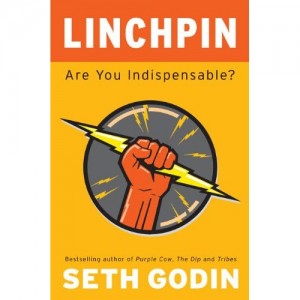
The concept of thrashing was introduced to me by Seth Godin in his book Linchpin:
Any project worth doing involves invention, inspiration, and at least a little bit of making stuff up. Traditionally, we start with an inkling, adding more and more detail as we approach the ship date. And the closer we get to shipping, the more thrashing occurs. Thrashing is the apparently productive brainstorming and tweaking we do for a project as it develops. Thrashing might mean changing the user interface or rewriting an introductory paragraph. Sometimes thrashing is merely a tweak; other times it involves major surgery.
Thrashing is essential. The question is: when to thrash? (Linchpin, pg. 104)
 Thrashing and Shipping are two concepts that are closely connected (Make sure you read my other post on shipping). The closer a project gets to the ship date, the more nervous and involved people become. Your immediate supervisor realizes that when your project/report/widget goes live, it's going to reflect on him. As the due date for your group project approaches, the members of your group who haven't contributed realize that their grade is in this as well.

The late contributions of others can be detrimental to a project. At the 11th hour, major changes can harm the cohesiveness of the project. Despite this fact, the contributors frequently demand that their changes be implemented.

The wise and experienced leader will create an environment which encourages early thrashing. Call an all hands meeting as soon as the project/initiative/task is launched. Invite everyone who will have a stake in the project or whose reputation could be impacted by the project. Make them come.

If they don't come to that first meeting, they forfeit the right to comment/modify/change the project at the last minute. If you want to give input, it has to be given early, not late.

The challenge will come as your ship date approaches. Despite thrashing early, you and your team will still be tempted to make major modifications, changes, and additions at the last minute. It's the nature of the human mind to doubt the quality of something immediately before it is publicly displayed. Resist these urges and be confident in your early planning.

The concept of thrashing early makes complete sense to me. After reading Linchpin I thought back the last project that I was involved in and it perfectly fit Godin's description of thrashing late. At the last minute we made enormous changes to our plans which completely threw off our schedule and put us over budget. We should have thrashed early.

Monday, August 1, 2011

Shipping

I recently finished reading Linchpin by Seth Godin. There were a couple of ideas in the book that were very powerful. One of them is the idea of shipping.
"The greatest shortage in our society is an instinct to produce. To create solutions and hustle them out the door. To touch the humanity inside and connect to humans in the marketplace."
Flickr via zyphbear
The concept of "shipping" is simple: an idea is fully realized and release for public consumption, use, or purchase. It's not just a scribble on the back of a napkin or a business plan in a file cabinet, it's a real, live, fully functional thing.

As I have become better connected in my industry (education), I become increasingly skeptical and frustrated by unrealized ideas. It's easy to criticize existing solutions and write about a much better method or idea. It's easy to blog about how this new piece of technology will revolutionize the classroom or how standardized testing is bad for students and should be abolished.

The internet is filled with talkers. The number of doers is far smaller.

A linchpin is someone who has the desire, determination, and drive to see an idea through to the end. Not just to talk about it, not just to criticize the existing establishment, but to actually do something to change it. Linchpins ship.

Shipping is scary, because once you complete something and open it up to public examination, you become the object of evaluation and criticism, and it's always a possibility that your idea will fail.

The most successful companies and individuals who have the ability to overcome obstacles, maintain vision and focus, and push a product, idea, or solution out the door.

I'm evaluating the things that I spend my time doing to make sure that I'm producing something of value, not simply adding to a deluge of words.

Monday, April 18, 2011

Book Review: Wikinomics

[Note: this post was written in April of 2010. For whatever reason I never finished it. While browsing through my archives I found it and decided it was time to publish!] 

For the past several months I've been working my way through Wikinomics by Don Tapscott and Anthony D. Williams. The book was different than I expected and not quite as applicable, yet there were some key ideas that I'd like to share.

The thesis of the book is that industry is changing because information is abundant and cheap and connecting with people is easy. The old system of top-down decision making and closely guarded company secrets is over. The new system is one of collaborative relationships, transparency, and generosity.

I say that Wikinomics was different than I expected because it is written (IMO) to help large existing companies adapt to the demands of the 21st century. It is not written for an individual who is trying to better understand the forces currently shaping society. Despite this, there are several important lessons and principles that I thought were useful.

1. Give people tools to create, remix, and share your products.
2. Be very careful about exploiting the creations of your customers. Figure out a way to give them a piece of the profits.
3. The person who can best help you probably isn't an employee.
4. Figure out what your most valuable contribution is and focus on it while resourcing the the other components to others.

Friday, April 1, 2011

Are You an Artist?

Flickr Via Tomroid
Are you an artist or a day-laborer?

A day-laborer does the bare minimum, follows the rules, doesn't go outside of his job description, clocks in on time and clocks out on time. 

An artist goes well beyond what is expected, rarely follows the rules (in a good way), extends his role, creates unexpected value, and doesn't keep track of time because he loves what he does. 

In his book Linchpin, Seth Godin further describes art as:
  1. A personal act of courage
  2. A personal gift that changes the recipient. 
  3. A free gift. 
  4. An act of human expression. 
  5. Original
  6. The product of emotional labor


Friday, March 25, 2011

What They Should Teach in School

I'm reading Linchpin by Seth Godin.

Godin argues that only two things should be taught in school:

1. How to solve problems.
2. How to lead. [source]

I tend to agree with him. Learning facts does not set you apart in today's information driven culture. It's what you do with what you know and how you can lead others to use what you know that is important.

Employers are looking for problem solvers and leaders.

Now to figure out how to actually teach these two skills effectively...

Wednesday, April 21, 2010

An Educational Artist

I recently listened to a podcast [iTunes Link] that featured popular author and blogger Seth Godin who spoke about his most recent book Linchpin. I haven't read the book (but it's on my list!), and can't give you a full summary, but in the interview Godin made an astounding point about art.

Art, according to Godin, "changes people. It connects with them in a way that they want you to connect with them and causes positive change." When we think of art we think of a painting, a musical performance, or a play. We don't think of art as a teacher connecting with a student, or a family by causing positive change in their lives. We don't, but we should.

The thesis of Linchpin (according to what I heard in the interview) is that people who are indispensable within an organization do not control systems, they connect with people. Anyone can grade papers, create seating charts, or write lessons plans, but only you can connect with and interact with your students, faculty, and school community in a way that builds them up, encourages them, and pushes them to do great things.

I am an educational artist.

Thursday, February 25, 2010

Don't Read your Textbook


Note: I decided to take a little break from my normal ed. tech posts. Here's an article that I wrote for a local school newsletter.

Reading is a critical skill for academic success. This includes the sciences. Sadly, when it comes to reading, most students only think about their textbook. How boring! Reading textbooks provides great instruction and information but doesn’t do much to excite students about science. When given the option of reading a science textbook or a favorite novel, it’s no surprise that the textbook gets put up on the shelf.
You don’t have to read a textbook to learn about science. There is a wealth of literature that illustrates scientific principles, heralds scientific discoveries, and encourages exploration. It is only when students are excited about the possibilities of science that they will be willing to engage in the difficult work of mastering scientific concepts.
Reading science literature for pleasure benefits students in two ways. First, engaging with complex information develops the brain and requires higher order thinking. This type of cognition is critical for success in the sciences. Secondly, when student see examples of scientific discoveries, breakthroughs, and triumphs, they will be eager to learn more. Compelling stories provide a context for scientific facts. Yes, this stuff actually can be useful! There is no greater example of this than the space race of the Kennedy era. The triumph of putting a man on the moon is still amazing even today. Reading an in-depth account of this adventure encourages scientific exploration.
My teaching partner at Southfield Christian School, Dr. Jan Guthrie, and I have compiled a list of books which we use to encourage high school student to read scientific literature for fun. It’s a mix of fiction and non-fiction. I have selected 10 of my favorites from the list to share with you. If you would like to full list (70+ books), please send me an e-mail: jsowash at southfieldchristian dot org.
Ten Great Science Books:All links to Google Books
The great influenza: The epic story of the deadliest plague by John M. Barry. (Genetics, Epidemiology, Biology)
Into thin air: A personal account of the Mount Everest* by John Krakauer (Ecology, Biology, Anatomy & Physiology)
Jurassic Park* by Michael Crichton (Genetics, Biology, Paleontology)
Rascal by Sterling North (Bology, Veterinary Sciences)
The Case for the Creatorby Lee Strobel (Biology, Chemistry, Physics)
Fearfully and Wonderfully Made by Philip Yancy and Paul Brand (Anatomy & Physiology)
Between a Rock and a Hard Place* by Aron Ralston (Anatomy & Physiology)
E: the story of a numberby Eli Maor (Mathematics)
The five biggest ideas in science by Arthur W. Wiggins, Charles M. Wynn (Biology, Physics, Chemistry)
My stroke of Insight
by Jill Bolte Taylor (Anatomy & Physiology)

* = parental review recommended due to language and or graphic content

Friday, September 4, 2009

Autonomy, Mastery, Purpose

Ever since I visited Google for the Google Teacher Academy I have been mulling the idea of what Google calls "20% time." That is, time set aside from your normal duties to work on projects of your own choosing and liking. Fellow blogger Joel Zehring posted a video from TED in which Daniel Pink lays out the case for this same model. I would encourage you to watch and consider Pink's idea.


If you don't have 20 minutes to watch the whole talk, it boils down to the following:

Traditional business models are based on incentives. If you accomplish this, you will be rewarded with this. It's the old carrot and stick approach. According to the research which Pink cites, this approach works only for rote, manual tasks. It does not work for dynamic tasks that involve creative problem solving.

The model that does work involves autonomy, mastery, and purpose. Workers should be able to work freely toward a goal, they should be constantly striving to increase their proficiency in their core duties, and they should be working on something that transcends themselves.

These ideas fit in well with Maslow's Hierachy of needs. Productivity should increase as self-actualization occurs.

Now, back to education. How can this be applied to the classroom? Here's my idea. I have a smattering of grades 9-12 in my biology classes. Each spring the seniors head out on their "senior trip." They're gone for a week which presents a challenge for me as I plan my units. I've decided to give my remaining students "20% time" (or as Pink calls it, FedEx days). For one week they will be allowed to learn about a topic of their choosing. At the end of the week they must have created something of value to share with their classmates and the world.

This is a bold and potentially disastrous idea. Are the forces of autonomy, mastery, and purpose strong enough to motivate and mobilize freshmen?

I covet your ideas and thoughts before I enact this crazy idea of mine. I have until March to figure it all out!

Sunday, August 23, 2009

Feeling Change

I'm currently reading The Heart of Change by John P. Kotter. I'm part of the vision team at Southfield Christian School that is working toward fundamentally changing the way that we educate students. Instigating and sustaining such radical organizational change is very difficult.

One of the key points that Kotter keeps hitting home is that true change requires a shift in behavior. This requires urgency that is felt, not thought. Kotter argues that in order to convince people to change they must feel the need to change, not intellectually agree that change is needed. Data, charts, memos, and presentations provide evidence supporting change, but don't motivate people to change. Throughout his book Kotter illustrates this point by sharing real examples of organizations that succeeded in changing by emotionally impacting the members of the company. Most of the examples involve symbols and physical examples of why change is needed.

After reading this, I began to think, how can I encourage change in my school? I believe that we need to develop an online component in our high school. Online learning is the future of education and we aren't doing anything to address it. I have presented data to my administrators, attended committee meetings, and discussed my ideas at length to anyone who will listen. No change has occurred. So, now it's time to try Kotter's idea. Does this video make you feel the need to change?

Essential Reading


Those of us planning on being in education for a while need to think about, prepare for, and understand the coming changes in education. Here are three essential works that speak to each of these things:

1. Disrupting Class by Clayton Christensen
A disruptive innovation is an idea that, at first, is not accepted because of its expense, and lack of application to everyday life. Over time this innovation gains a following amongst a fringe crowd who develop a cult-like following. More an more people begin to adopt the innovation and them seemingly overnight the innovation overtakes the incumbent way of doing things and becomes the dominant form. Examples include the horseless carriage (replacement of the traditional carriage) and digital photography (replacement for film photography). Online learning is a disruptive innovation.

2. The Future of Education by Thomas Frey
In this bold article Frey claims that a radical shift in education will occur due to the emergence of standard course-ware software so that companies, universities and school districts can quickly and easily create content that can be accessed from around the world. A key component of this software will be the ability to accurately assess mastery of learning. Read my full summary of this article here.

3. Blue Ocean Strategy
There are two types of markets: red oceans and blue oceans. The red ocean is where most industries are: firmly entrenched against their competition with well defined value structures and customers. In the red ocean, companies compete to drive costs down while attempting to maintain or raise their quality. This seldom works. Either costs go up or quality goes down. Furthermore the companies in the red ocean spend most of their time reacting to the actions of the competition.

In contrast, the blue ocean is uncontested market space. Companies who make it to the blue ocean re-envision their market, get rid of "sacred" elements that are outdated or a drain on profits and focus on increasing value for customers. The blue ocean strategy is to reduce waste, eliminate the unnecessary, raise quality, and create unexpected value. Many times, a company intent on creating a blue ocean strategy will mash two typically unrelated industries together. A perfect example of this is Cirque du Soleil. Taking the best elements of the circus and the theater while discarding and eliminating the fat from both, Cirque du Soleil is in uncontested territory.

Despite advancements in technology, the educational system in the United States has remained largely unchanged. Most schools are in the red ocean. Huge potential exists for any school that is willing to venture out into the blue ocean by re-envisioning how we do education, by taking the best, cutting out the fat, and adding value that those in the red ocean can not match.

Saturday, February 21, 2009

Planet Google


Innovation and creativity are two qualities that fascinate me because they are two traits that I desire to improve in my own life. Starbucks, Apple, and Google are three companies which have amazing quantities of creativity and innovation. I have determined to take a closer look at these companies to try and find out the source of their creativity, innovation, and industry perception.
I began my quest by examining Google through the reading of Planet Google by Randall Stross (2008, Free Press) during my multi-leg, multi-day trip to and from Kosovo (see my previous post for an explanation of what I was doing there!). Stross has an engaging writing style and includes lots of interesting inside information about the corporate culture at Google; however he does suffer from a tendency to jump from one topic to the next. As long as you can keep more than one story line going in your head, you’ll be fine!
Stross’ book chronicles Google’s unexpected and surprising rise to search engine dominance, and the growing PR challenges related to privacy concerns and capitalization on its assets. The first lesson on creativity and innovation that I gleaned from Google is to dream big. From the very beginning, the goal of Sergey Brin and Larry Page was to “organize the world’s information.” As two post doctoral students with very little experience or capital, this was an absolutely audacious goal. Their quest to organize information is the key mission of Google and has guided its development ever since. Several top Googlers have indicated that it will take 300 years for Google to organize every piece of information in the world. No one really knows how accurate this estimate is or whether Google is providing the 300 year number as a serious estimate, but no one doubts that they will do their best to get the job done.
Google founders Page and Brin view everything as a mathematical problem. This stems from their extensive training as computer programmers (both have doctorate degrees in this field). The corporate culture at Google requires unbelievable problem solving skills which is one of the reasons that advanced degrees are strongly encourage and in many cases required. Employees are encourage to identify and solve problems that interest them—this has led to the development of some of Google’s most promising products—e-mail and the Google chrome web browser for example. The lesson here is to never shy away from a challenge. The human and financial resources at Google seem to be enough to solve virtually any problem.
The third and final lesson that I gleaned from Stross’ book is to adjust and adapt on the fly. Google’s corporate policy is to “publish now, fix later.” Almost all of its products (Google docs, e-mail, chrome) emerged with the beta tag still attached. Google does not wait to work out all of the details and kinks before introducing its products on a wide scale. Google views its users as partners with them in developing their products. Users submit feedback and give suggestions that help the engineers create useful, dynamic products. Getting products out into the market quickly also enables Google to stay ahead of its competitors.  The digital landscape is a wild roller coaster and only those companies which can stay ahead of customer demands will survive. So far, Google has been able to do just that.
Google’s corporate culture is different from that of any company I have heard of. Employees are encouraged to dream big, required to be problem solvers, and forced to adapt on the fly. These three qualities have, helped to make an information superpower.